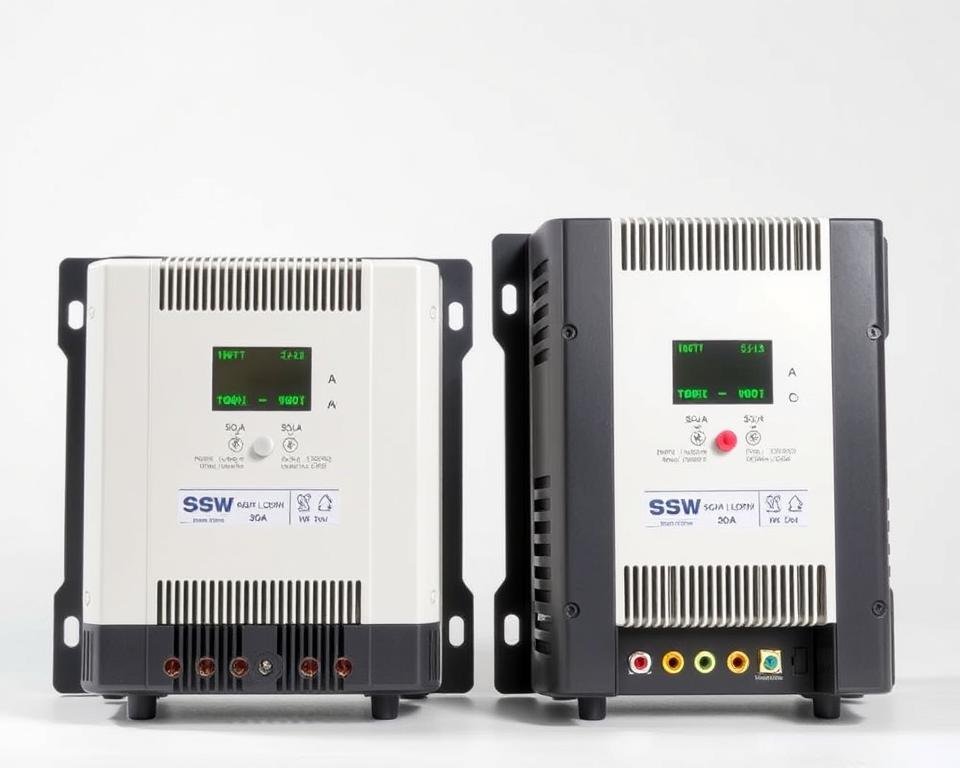
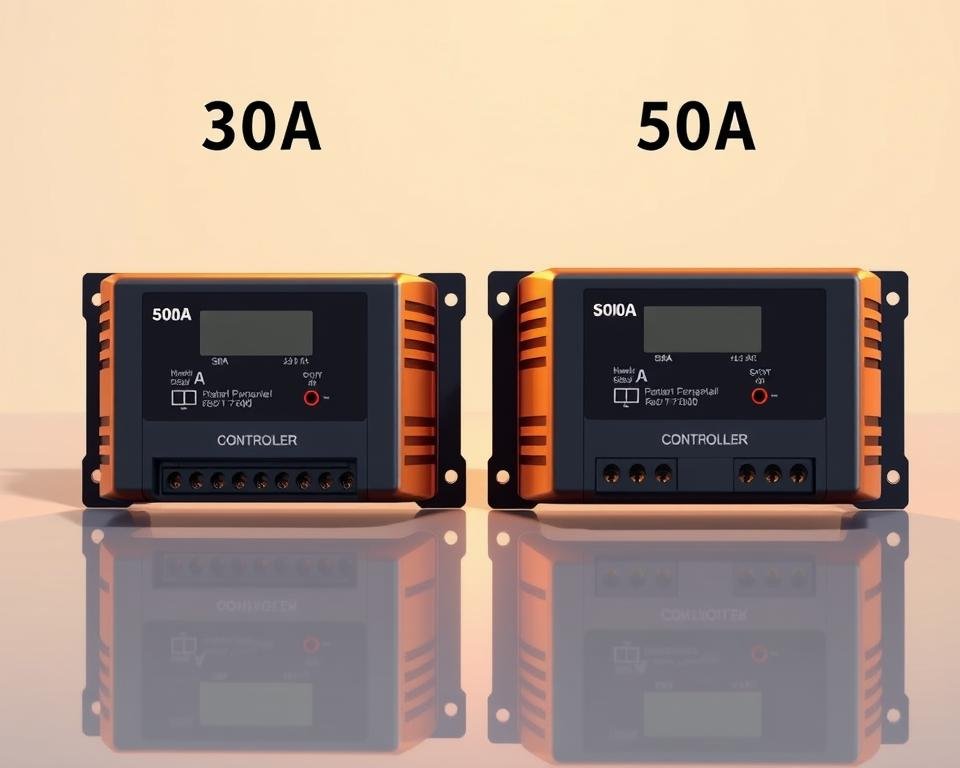
30A vs 50A Solar Charge Controller Difference – Full Comparison Explained.
Not sure which solar charge controller to purchase for your solar power system? Having 30a vs 50a solar charge controller difference, the 30A system would be your best option. However, there are more factors to consider before you make this purchase.
Assessing your solar system will help to determine which of these two controllers will suit your energy requirements and the size of your solar array. Comparing solar charge controllers will help you to identify the differences.
30a vs 50a solar charge controller difference will help to stream line and allow your solar power system to function properly and efficiently and to make the right selection. We will assist you in this regard.
Understand the key 30a vs 50a solar charge controller difference. Learn how to choose the right controller for your solar power system. Discover the importance of solar charge controller comparison. Find out how to ensure your solar power system operates efficiently. Make an informed decision with our comprehensive comparison.
Familiarity with the components of your solar power system and their role in your system’s functionality and sustainability are fundamental to understanding 30a vs 50a solar charge controller difference. These are the essential components of your solar energy system that allow power to flow from the solar panel to the batteries and allow for the efficient charging of the batteries without the overcharging and potential damage to the batteries. Understanding the 30A vs 50A solar charge controller difference helps you determine which controller best supports safe and efficient energy flow.
What is a Solar Charge Controller?
These overcharging and energy flow controlling functions of a solar charge controller make it one of the most important units in a solar power system. The solar charge controller sits in between your solar panels and batteries and is in charge of the energy flow from the solar panels to the batteries.
Types of Solar Charge Controllers
Solar charge controllers mainly fall under one of two categories: Pulse Width Modulation (PWM) and Maximum Power Point Tracking (MPPT)
PWM Controllers
PWM solar charge controllers are the first and more economically viable option. These controllers simply cut the power flow to the batteries once the batteries are close to full.
MPPT Controllers
MPPT solar charge controllers have the added advantage of being more efficient and more sophisticated than their counterpart. For larger and more complicated solar power systems, these controllers are the better option as they maximize the power being pulled from the solar panels.
Importance of Amperage Ratings
The amperage of a solar charge controller determines the maximum of amperes the controller can handle, meaning the controller is likely to burn out if the recommended amperes is exceeded. Therefore, choosing a solar charge controller with the right amperage rating is critical to operating the system within safe limits.
Controller Type | Amperage Rating | Efficiency PWM | Up to 30A | Moderate MPPT | Up to 50A or more | High
Very few solar charge controller users take the time to research the differences 30a vs 50a solar charge controller difference. Their decisions to choose controllers of these ratings can impact the efficiency, scalability, and overall cost of their renewable power set up. Therefore, understanding these two ratings can potentially optimize your solar power system.
Power Handling Capacity.
The power handling capacity of a solar charge controller is a critical factor in determining the charge controller’s suitability for your solar power system. It directly determines the Maximum Solar array size a controller can handle and the battery bank compatibility.
Maximum Solar Array Size
A typical 30A solar charge controller will suit smaller, more compact solar array systems as it is designed to handle solar array configurations with a maximum power output that matches its current rating. On the other hand, a 50A controller will suit larger solar array insutallations as it is able to handle larger solar arrays.
Another very important final compatibility aspect is the solar charge controller’s compatibility with your battery bank. A 50A controller does offer more flexibility with system design, as those can accommodate larger battery banks.
“The right solar charge controller can make all the difference in the efficiency and longevity of your solar power system.” John Doe, Renewable Energy Expert
System Applicatyions
The application of your solar power system determines what type of solar charge controller you require. Depending on the size and intended purpose of the system, various systems will have various requirements.
Perfect Uses For 30A Controllers
Small residential solar systems
Remote cabins or RVs with limited energy needs
Small scale water pumping systems
Perfect Uses For 50A Controllers
Large residential solar systems
Commercial solar installations
Large scale off-grid systems
Cost and Value Analysis
Although 50A solar charge controllers will tend to be more expensive than 30A controllers, the larger systems 50A controllers can manage often makes them of better value for larger installations in the long run.
Factors to Consider During Setup
The main factors to consider for both solar power users are the issues of wiring, mounting, and system monitoring of both types of controllers. This will help make sure the solar power system’s life and functionality are sustained.
Expansion Capabilities
When making a choice 30a vs 50a solar charge controller difference, future expansion plans should also be kept in mind. Based on these plans, it could be a better choice to go with a 50A controller. This will make it possible to fit more solar power system components into the system later on.
Conclusion
This post reviews the main considerations for deciding 30a vs 50a solar charge controller difference. Identifying problems that controllers are fully compatible with, and the design of the system, the user can now make a more empowered choice.
A solar charge controller with 30A charge control could easily work with small systems since a system of this size will have lower power demands. On the contrary, a 50A controller charge system can work better for larger systems and systems that have more power demands.
The main purpose of the post is to make sure that the system can work at its optimal capacity. Having some good understanding of the differences in solar panel configurations, and the charge controller amperage will be useful in making the right choice to assist the user in solar charge controller comparison.
By selecting and installing the ideal controller, clients unlock greater performance, value, and reliability from the solar power system.
FAQ
What is the main difference between a 30A and 50A solar charge controller?
The main 30a vs 50a solar charge controller difference is power handling capacity. The a 50A controller can handle a larger solar array in addition to larger battery banks, making them more appropriate for larger solar power systems.
Can I use a 30A solar charge controller with a larger solar panel system?
No, using a 30A controller with a larger solar panel system can potentially lead to system inefficiencies and in the worse case, system damage due to overloading. It is essential to have the controller’s ampere rating aligned, in agreement with, what is required in the system.
Are MPPT solar charge controllers more efficient than PWM controllers?
Yes. MPPT (Maximum Power Point Tracking) controllers are more efficient than PWM (Pulse Width Modulation) controllers in larger solar power systems as they are more efficient in optimizing energy harvest from the solar array.
How do I determine the right solar charge controller size for my solar power system?
To determine the right size, the total current output of your solar array, and the voltage of your battery bank have to be looked at. The controllers ampere rating should at the minimum, meet the ampres a solar array can output.
Is a 50A solar charge controller okay for smaller solar power systems?
A 50A solar charge controller can be used for smaller systems but may be overkill and drive up costs. Controllers need to fit the systems they’re being used for.
What are the installation considerations for 30a vs 50a solar charge controller difference?
Some installation consideration include compatibility with the solar array and battery bank, and the controller being appropriately sized to the system’s voltage and current. Bigger 50A controllers might need extra wiring.
Is there a need to consider any possibilities for future expansion when deciding a 30a vs 50a solar charge controller difference?
Yes. If you expect to grow your solar power system, starting with a 50A controller might be the smartest and most economical option for future expansions.
I am a Digital Marketing Specialist with a strong focus on SEO and over five years of experience in the field. Since beginning my career in 2020, I have developed expertise in managing my own websites as well as collaborating with other professionals to achieve impactful results. Throughout my career, I have honed my skills in project management and audience engagement, ensuring effective communication and successful marketing outcomes.